
Homemade BLDC High-Torque Actuator
A high-torque brushless actuator I build almost entirely on my printer — hand-wound stator, printed structure, integrated bearing.
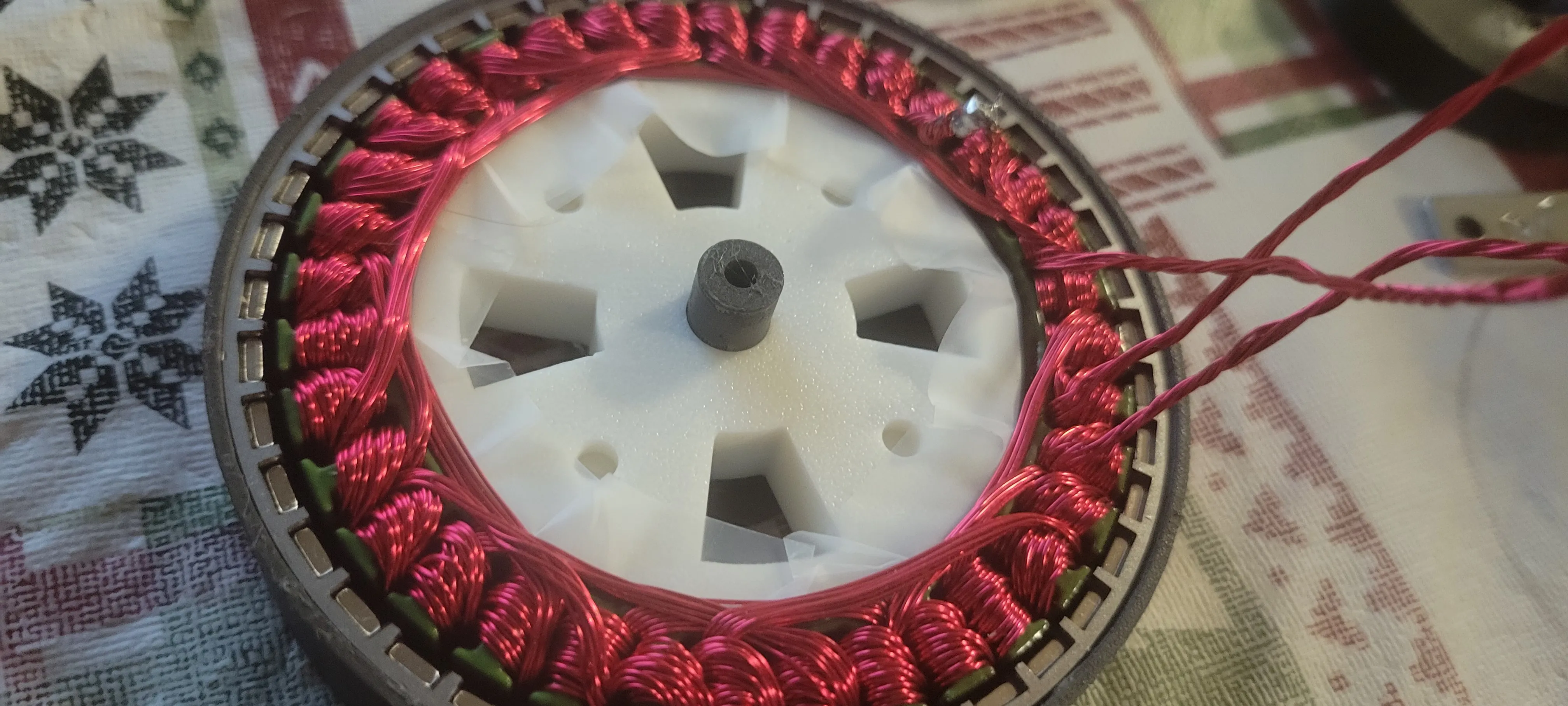
I wanted a joint that could actually hold weight without a gearbox the size of the joint itself. So I built my own brushless actuator — and printed nearly all of it.
Construction
The structure is 3D printed: the rotor carrier, the stator mount, the housing. A bearing presses into the printed hub so the whole thing spins true. Then I hand-wound the stator with enamelled copper — slot by slot, by hand, which is exactly as tedious as it sounds, and the part where a tiny mistake costs you the whole winding.
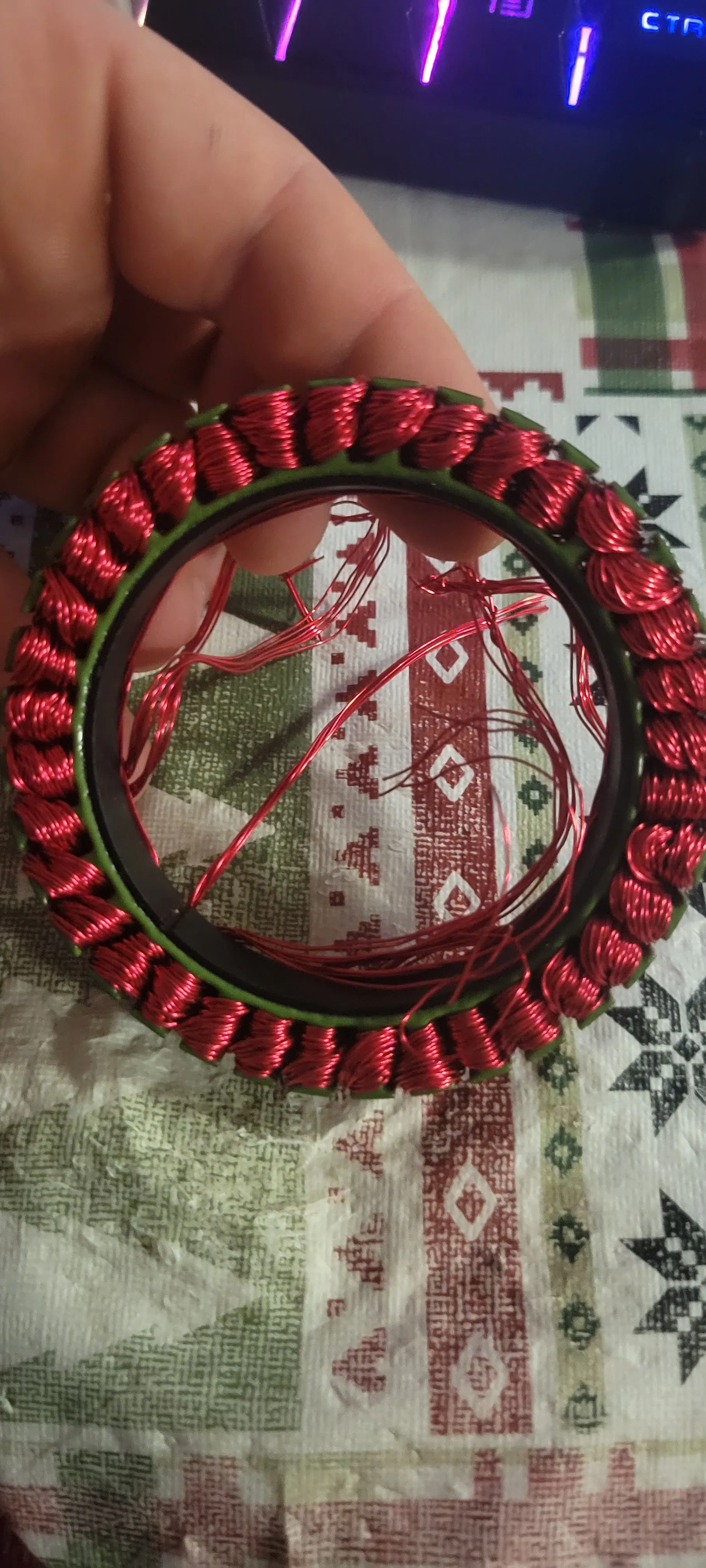
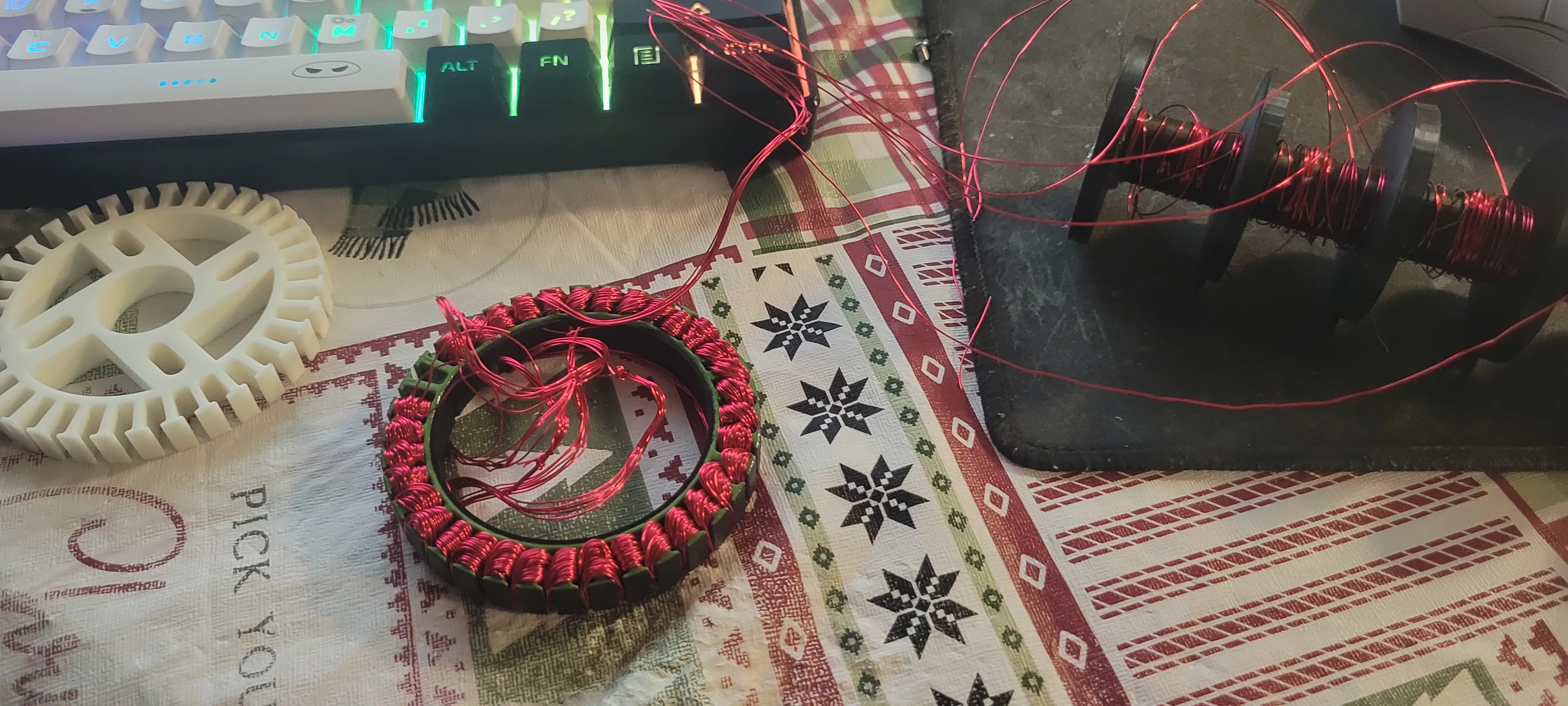
Printed plastic and a high-torque motor sound like a bad pairing. The trick is keeping the heat and the load in the metal parts and letting the plastic just hold geometry.
Specifications
- Motor: 3-phase BLDC, designed, hand-wound, and tuned in-house
- Electromagnetic layout: 42 rotor magnets, 36 stator teeth
- Winding: 6 strands in parallel, 5 turns per tooth
- Reduction: 9:1
- Actuator output: just under 20 N·m through the 9:1 reduction
- Drive behavior: quasi-direct-drive and backdrivable
- Control: positional control
The torque figure is measured at the actuator output after the reduction. It is not a bare-motor torque claim.
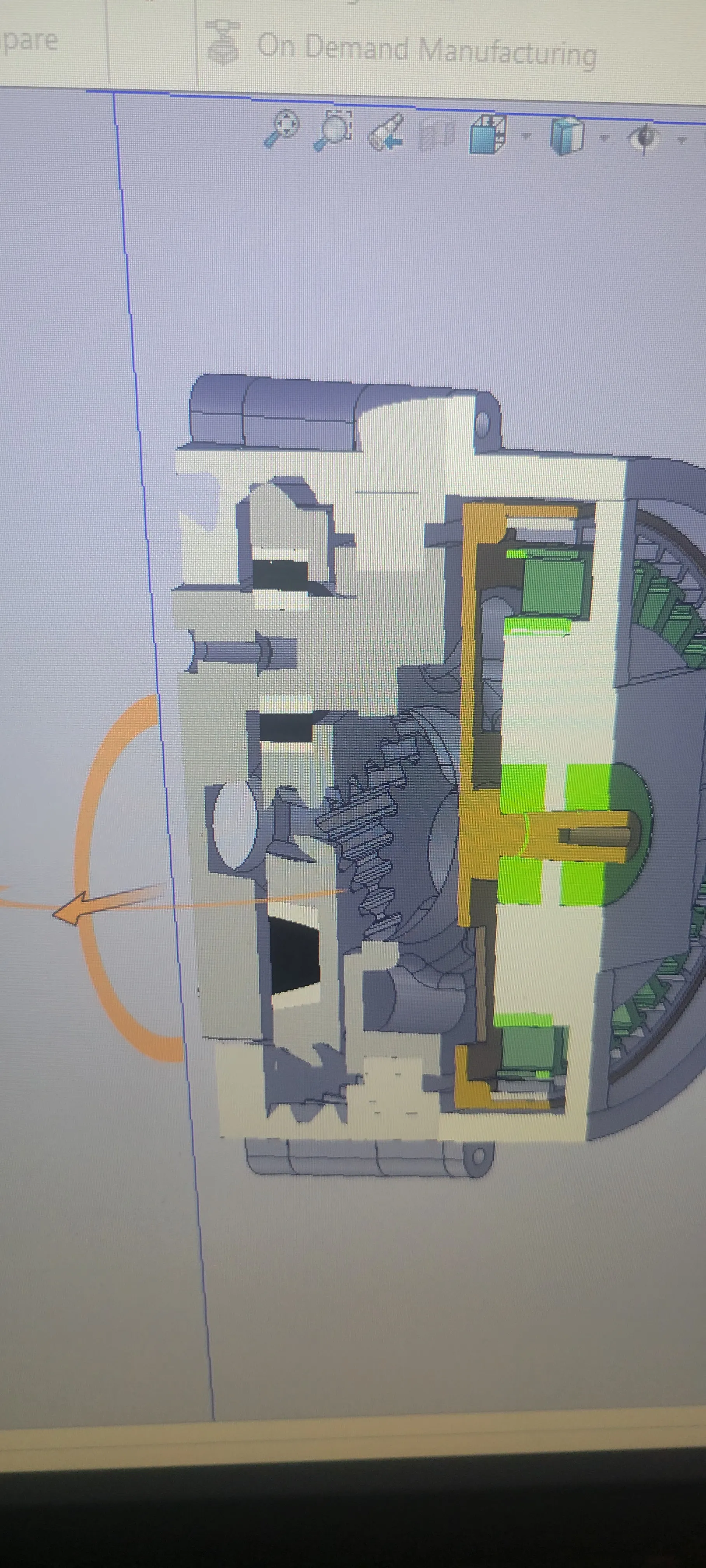
Reduction and packaging
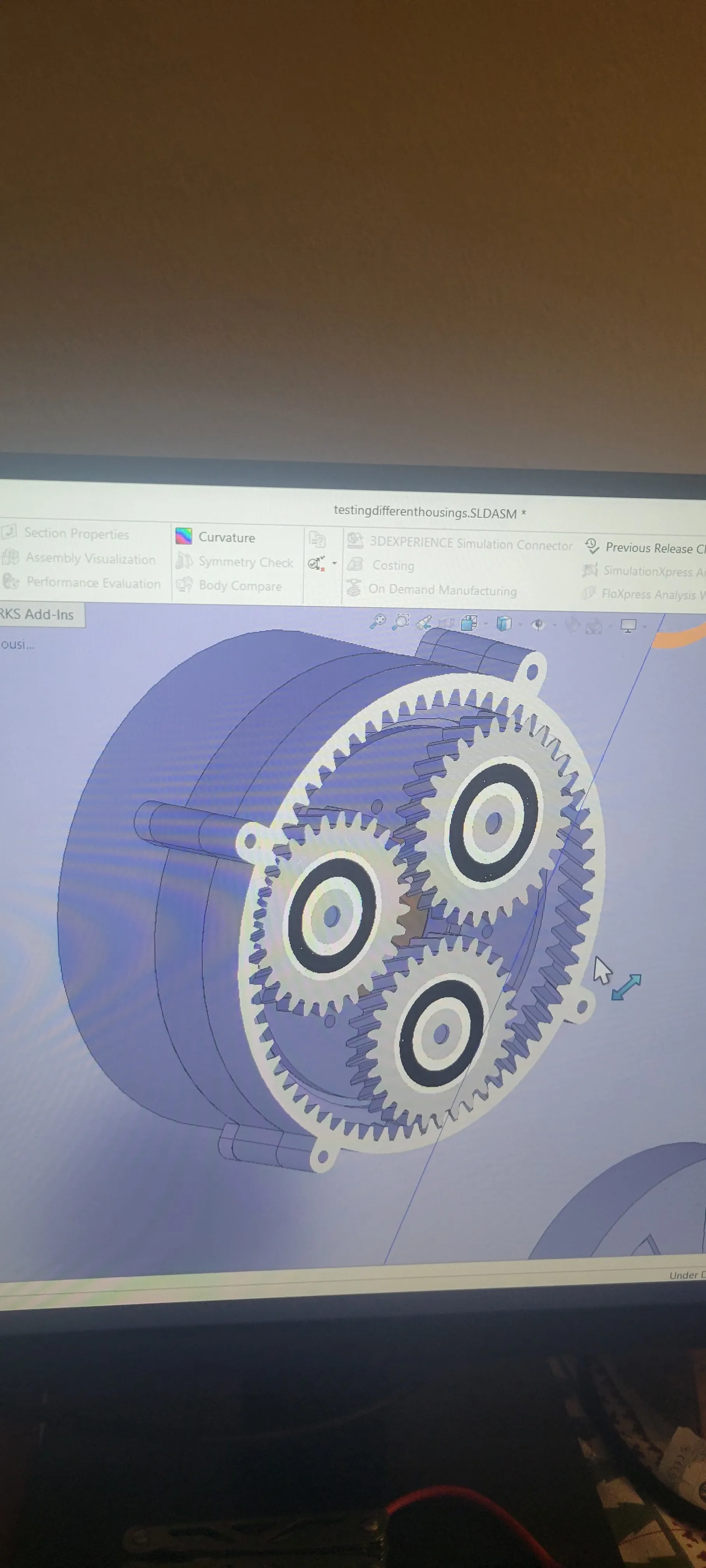
Build log
2026-04-28 — Positional control
Positional control is working. The 9:1 reduction and current stress testing came next.